


Okuma Celebrates Women in Manufacturing
For generations, Australian and New Zealand’s manufacturing sector, especially metalworking, has carried the reputation of being a male stronghold. Today, the narrative is shifting as women increasingly take their place on the factory floor, in design studios and at the helm of national and international corporations.
Their growing presence is more than a question of fairness; it is a driver of economic resilience. By bringing fresh perspectives to engineering challenges, design processes and workplace culture, women are helping to close critical skills gaps in welding, machining and fabrication while strengthening supply chains and boosting productivity. From family-owned workshops to global enterprises, their contributions are reshaping and inspiring the next generation to see manufacturing not only as accessible but as a rewarding career path.
Interviews conducted by Okuma Australia and New Zealand with seven outstanding women in manufacturing with roles ranging from the factory floor to that of Chief Executive, highlight the significant contribution that women are making in a changing manufacturing environment.
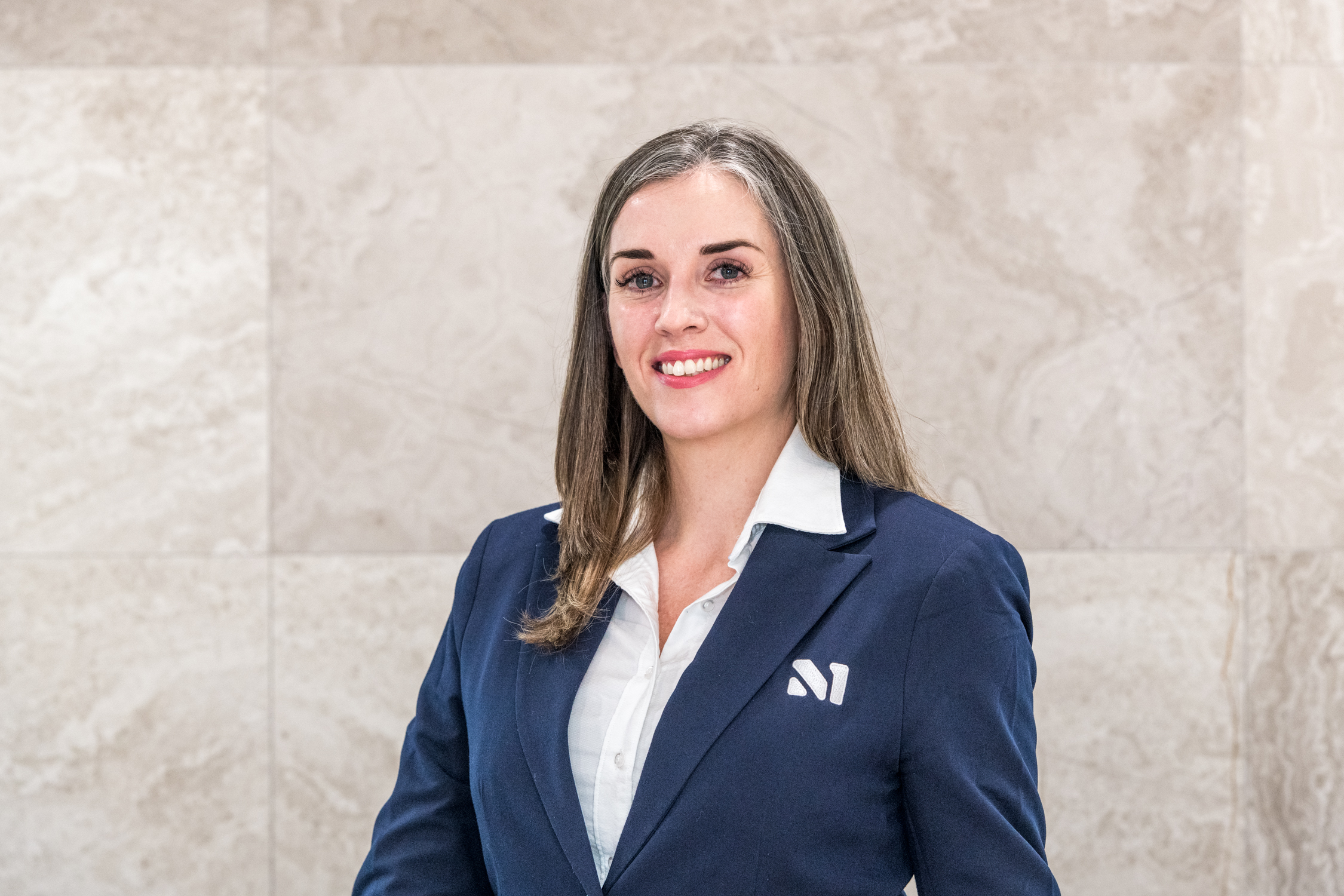
Erin Wright, Chief Financial Officer with Maskill, a leading specialist in undercarriage solutions for heavy mining equipment and special processes for mining operations, spoke of her background in Defence Industry where she was exposed to manufacturing.
Erin commented, “Manufacturing piqued my interest and when the opportunity to work with Maskill came about, I jumped at it.”
Maskill has been recognised as one of Australia’s fastest growing private companies with 96 employees and females are strongly represented through the organisation with 50% Board members, 40% Senior Management, 20% Supervisors and 13% of all staff including head office personnel.
Whilst the work can be hot and dirty there are two women on the floor in the manufacturing area and many of the work practices have been redesigned to attract women, so the industry is changing. The benefit of these changes including family friendly policies has also benefited male colleagues. There is a very strong work ethic with high standards and a culture of respect and inclusion throughout this company.
Females are being attracted to manufacturing as a result of networking with other companies, Human Resources (HR) drive and Queensland Government policies such as school visits and work experience programs.
Erin’s experience confirms that there is a strong future for women in manufacturing not only in administration but in developing roles in technology, all contributing to smarter workplaces. Women are actively participating in strategic leadership and driving innovation as industry changes.
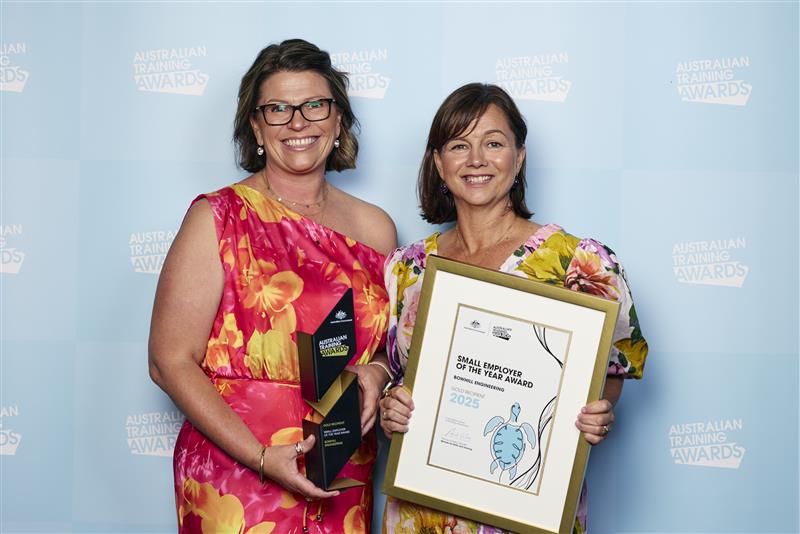
Jodie Hawkes, Chief Executive Officer of Bowhill Engineering entered manufacturing after a tragedy struck the family when the founder and innovator of the company was killed in a motor vehicle accident aged 30 years. Jodie’s husband became Managing Director at the age of 27 and she joined her husband to do whatever was necessary to assist the survival of this small family business.
Jodie’s skills significantly contributed to the development of systems in administration, Human Resources (HR), Project Management, Quality, Safety, Environmental Compliance, IT, Marketing and Finance as Chief Financial Officer (CFO).
Today this growing company employs 67 personnel including 15 apprentices and is highly regarded as a specialist in the fabrication of heavy and complex steel structures from design optimisation through to installation.
Bowhill Engineering has a number of women within the manufacturing area with two working in the welding and fabrication area, one on the workshop floor as materials coordinator, two in the project office plus five in Human Resources (HR), administration and accounts.
Systems and procedure development plus training have all played a major role for Jodie along with developing the potential of her people.
“The industry is changing with more reliance on technology which is an area in which more women can make a strong contribution. Whilst there is a perception that manufacturing is male dominated, our policy is for the best person for the job, irrespective of their gender, race or ethnicity”, said Jodie. “Women are contributing to smarter workplaces and are essentially more adept at systems and procedures, diversity, multi-skilling and a clean environment”, she said.
Positive contributions are made through the leadership team with Jodie at quarterly leadership meetings which focus on strategies and 90-day goals. Women bring a high level of professionalism to the business lifting professionalism, respect and positive communication.
Apart from her role as CEO of Bowhill Engineering, Jodie is currently the South Australian Deputy Chair of the Regional Development Australia (RDA) and is passionate about regional Australia and the opportunities held within.
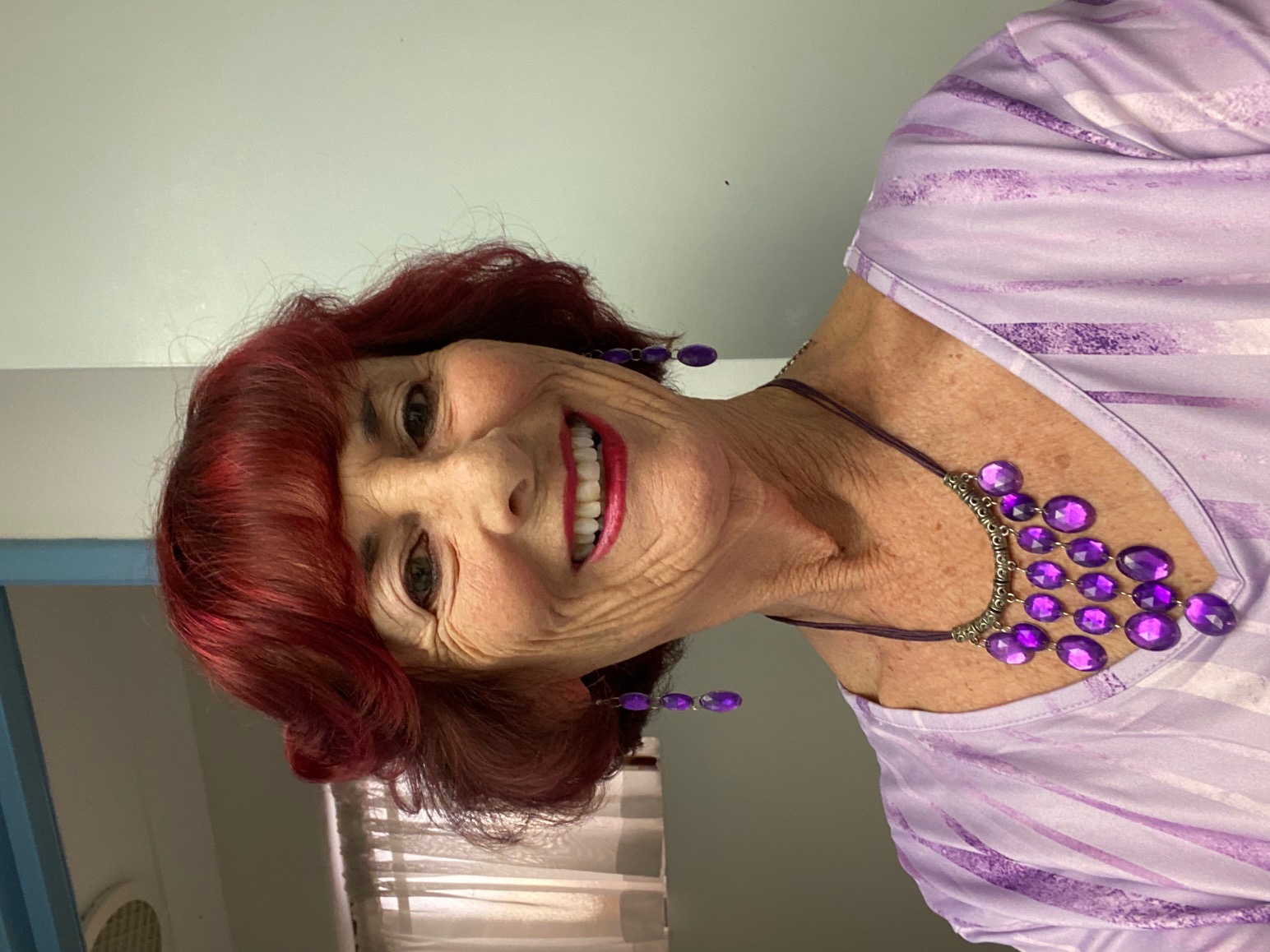
Elana Kolman, Director- Facet Engineering, WA, was founded in 2001 by father and son team Morris and Shawn Kolman and is a company based on high quality output, with Elana specialising in all aspects of the CNC machining business. The family has been in business since 1978 and Elana has been running the business for more than forty years with her husband and this continues today although her husband is now retired.
Originally the Kolman family arrived from South Africa with absolutely nothing and worked on providing a 100% very personalised service to their customers which continues today. Now employing a staff of 18 including two apprentices, the company is male dominated in the manufacturing area with an all-female staff in administration.
Elana is seen as a role model by many in the industry due to her strong work ethic and guidance to her younger staff.
The machines are much more sophisticated and work longer with an evening shift now operating to meet the high expectations of its customers for on-time reliable service.
The women under Elana’s guidance actively participate in strategic leadership and drive innovation particularly in cost savings, safety and Occupational Health & Safety OH&S) with each one possessing strong organisational skills.
Although the industry is changing Elana sees the strong contribution of women in manufacturing to be in the finance, administration and technology areas in the future.
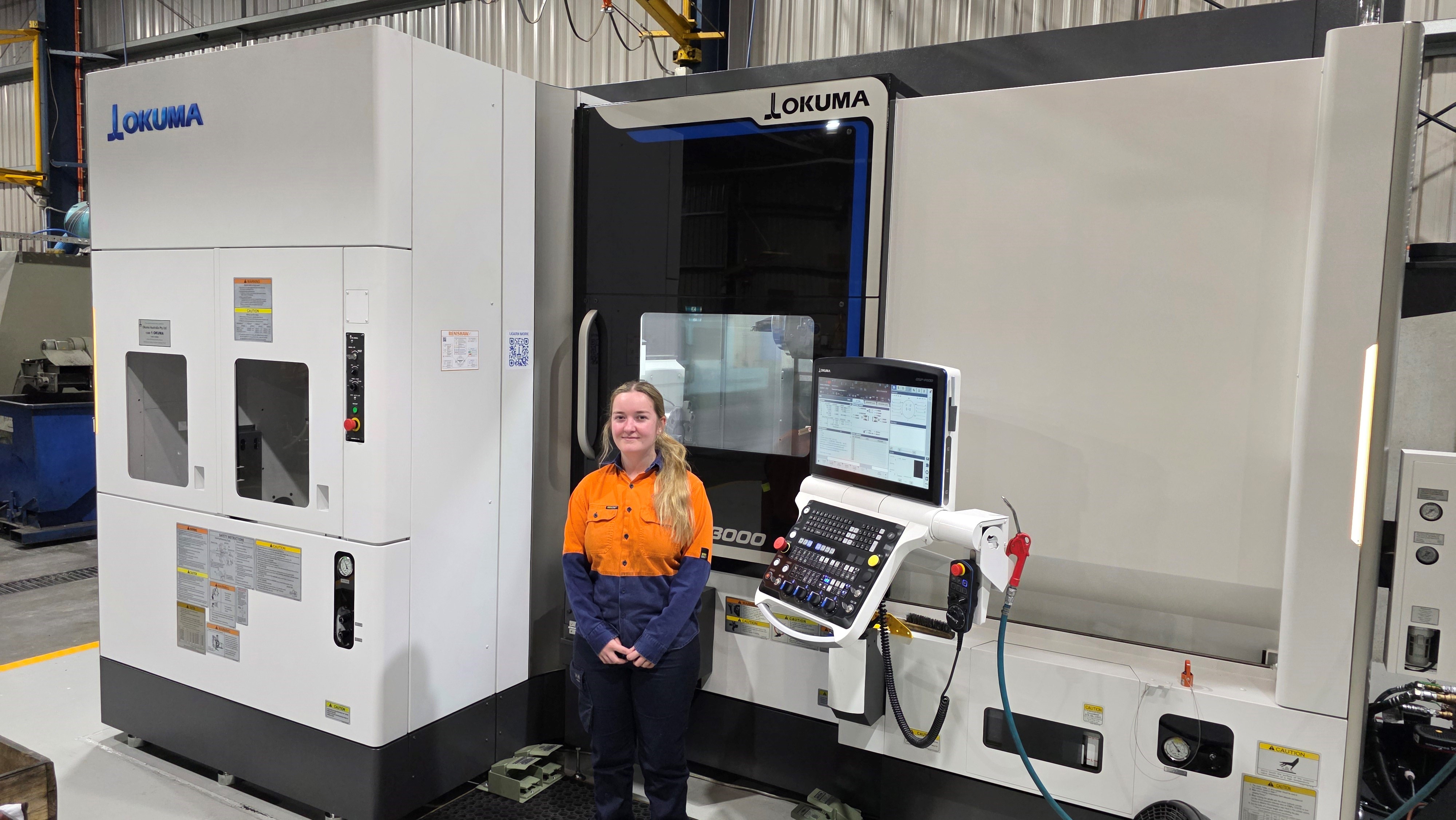 Chantelle Leeman is a qualified fitter and turner at Hardman Brothers of the Hardman Group, specialists in gearbox solutions, custom gear manufacturing, CNC machining and general engineering.
The company supplies gearboxes and gears to a diverse range of industries including mining, general engineering, agriculture, energy, automotive, rail and aerospace.
Originally, Chantelle‘s interest was to take up automotive mechanical engineering but the opportunity opened up to undertake an apprenticeship in fitting and turning.
“My father was a diesel mechanic and I always wanted to work with my hands and I was not interested in office or ‘girlie’ work. There have been no barriers working as a female in a male dominated work environment as I have found all my colleagues are supportive and respectful,” said Chantelle.
The work in CNC engineering is challenging and technically suited to women with long term opportunities for progress into more senior roles. Chantelle works in a clean environment but doesn’t mind getting dirty where the work or material demands it.
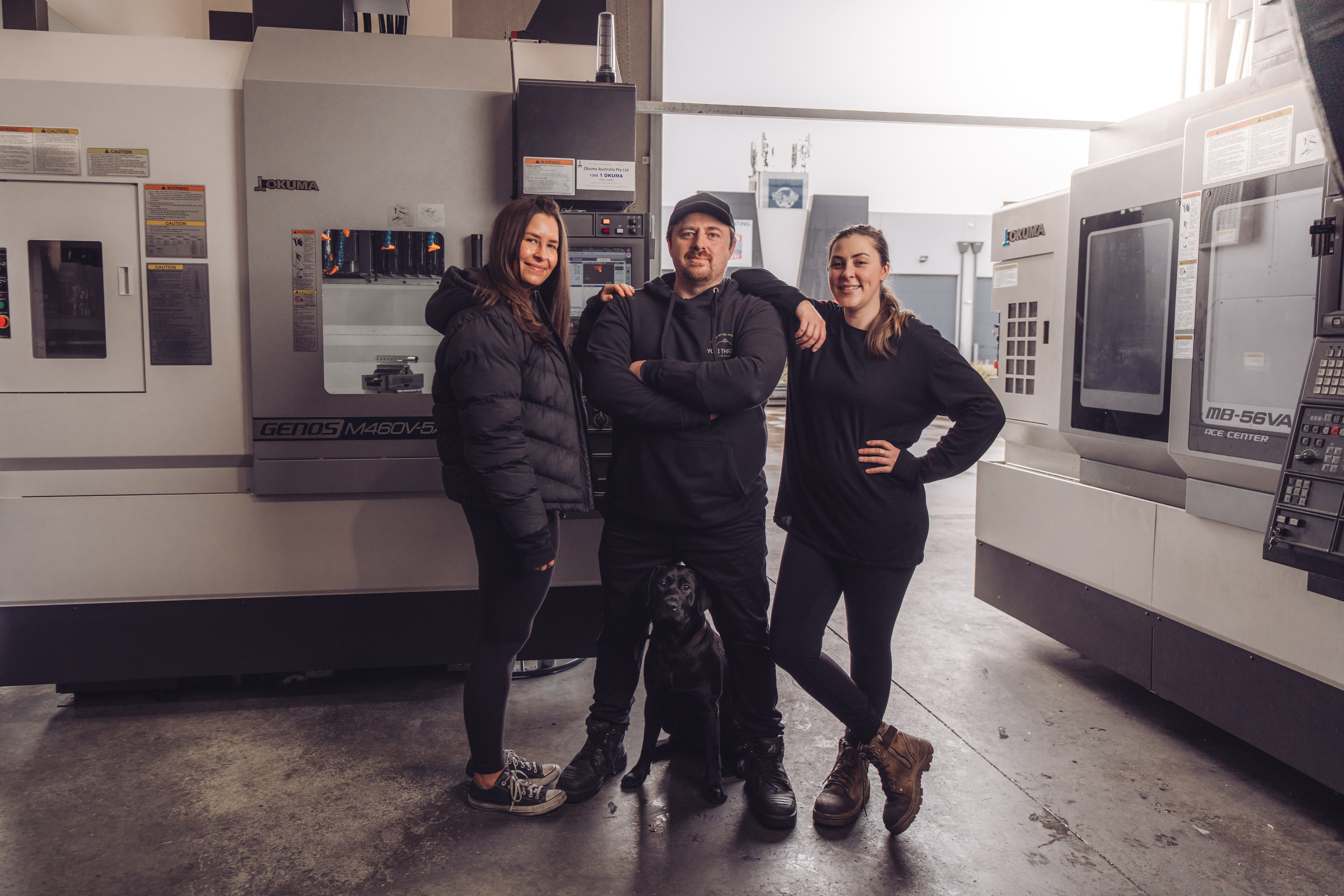 Simone Kramer – Director, Boss Tooling, Victoria. Simone’s first involvement in manufacturing was spent working for her father in a jewellery manufacturing business. Her father was always her biggest supporter when forging her career as a business owner and leader.
Simone’s career in engineering manufacturing began when she joined her partner, Brian Cogley’s family business 15 years ago, where she was trained to run the entire administration from purchasing to invoicing and the financials. Brian and Simone were encouraged to start their own business and with Brian’s trade experience and her experience gained in administration they had the combined skills to succeed with Boss Tooling in specialised CNC Engineering.
As a small company of just three people Simone covers all the administration tasks including financials and bookkeeping, order scheduling and planning plus in her role as Director of the company, a general oversight of operations and compliance.
In the early years of the business Simone spent time on the production floor helping Brian but with Brian plus Simone’s sister Melanie who had joined the company, Simone’s concentration is now dedicated to the administration of the company.
There are no limits to what women can do particularly in running the business and with the advances in technology steadily progressing, this is an area in which women can make a significant contribution to advanced manufacturing.
As a small family business, gender does not come into strategic planning and development as we are all totally involved.
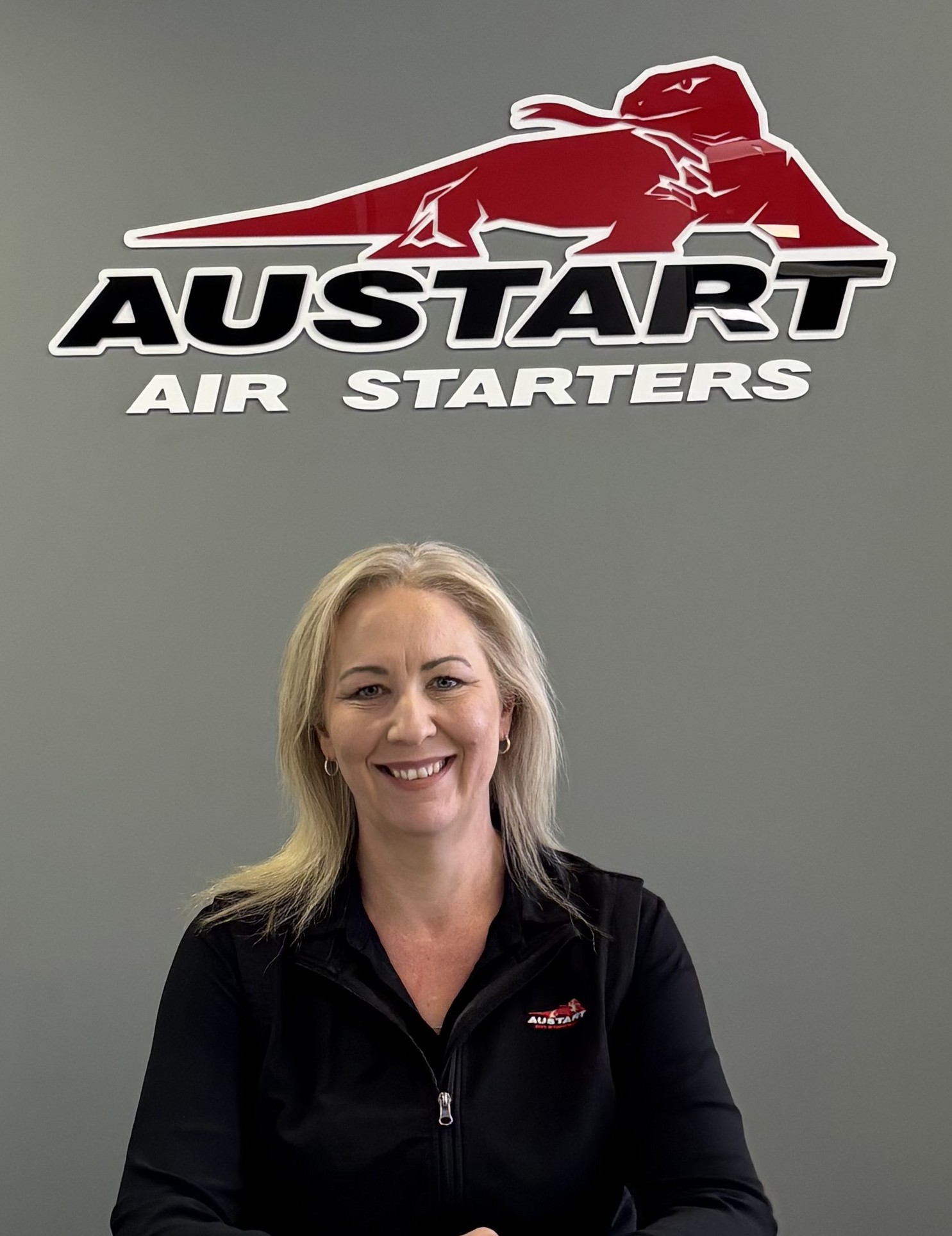 Narelle Crook – General Manager K H Equipment – Austart Air Starters has dedicated 30 years to KH Equipment beginning her career with the company as an 18-year old Receptionist/Girl Friday moving into Administration/Finance with Quality Systems involvement, becoming Administration and Finance Manager until three years ago when appointed General Manager of the company. Today, Narelle continues to lead the company with the same passion and dedication she has shown throughout her remarkable three-decade journey
With a staff of 43, KH Equipment specialises in engineering and manufacturing with more than 40 years’ experience in multiple industries such as mining, sovereign capability, transport, marine, motorsport and oil & gas. It is the only Australian manufacturer of air starters and has established worldwide markets.
For Narelle it was not so much as choosing a role in manufacturing but once there, her involvement in constant problem solving, continual improvement, systems development and working with people that are highly motivated and driven, stimulated her. It was also the opportunity to learn new skills and observe technology advances that piqued her interest. There are a number of women in the company who work in administrative and QA roles rather than on the manufacturing floor.
“Working in such a stimulating environment there were no barriers in any role in which I have participated and there has always been a great deal of respect and cooperation throughout,” said Narelle.
Though not acknowledging any particular role model, she continues to be inspired working along-side motivated people including the owner of the company Ken Horner, who started the company in 1977 and is still seeking different or better ways of doing things.
From Narelle’s experience women tend to have strong problem-solving skills through asking questions and a passion for continuous improvement and supporting the team in finding smarter ways in doing things.
The industry continues to change with the advancement of technology, the use of new software particularly in the manufacturing area, job scheduling on large interactive screens, timekeeping on tablets etc. each providing real time information.
There is no suggestion of dirty heavy work in this manufacturing operation as the floors are pristine, painted in a light colour, there are pot plants throughout and 5S principles are followed to make a very pleasant environment for everyone and an area in which anyone would find it a pleasure to work.
The women tend to be skilled in multi-tasking and systems development potentially contributing to a more balanced and collaboration of ideas. Safety is built into the culture of this company and women’s emotional intelligence does help for an inclusive environment.
Positive contributions from women within KH Equipment have been responsible for streamlining and improving company systems and supporting team members in difficult times.
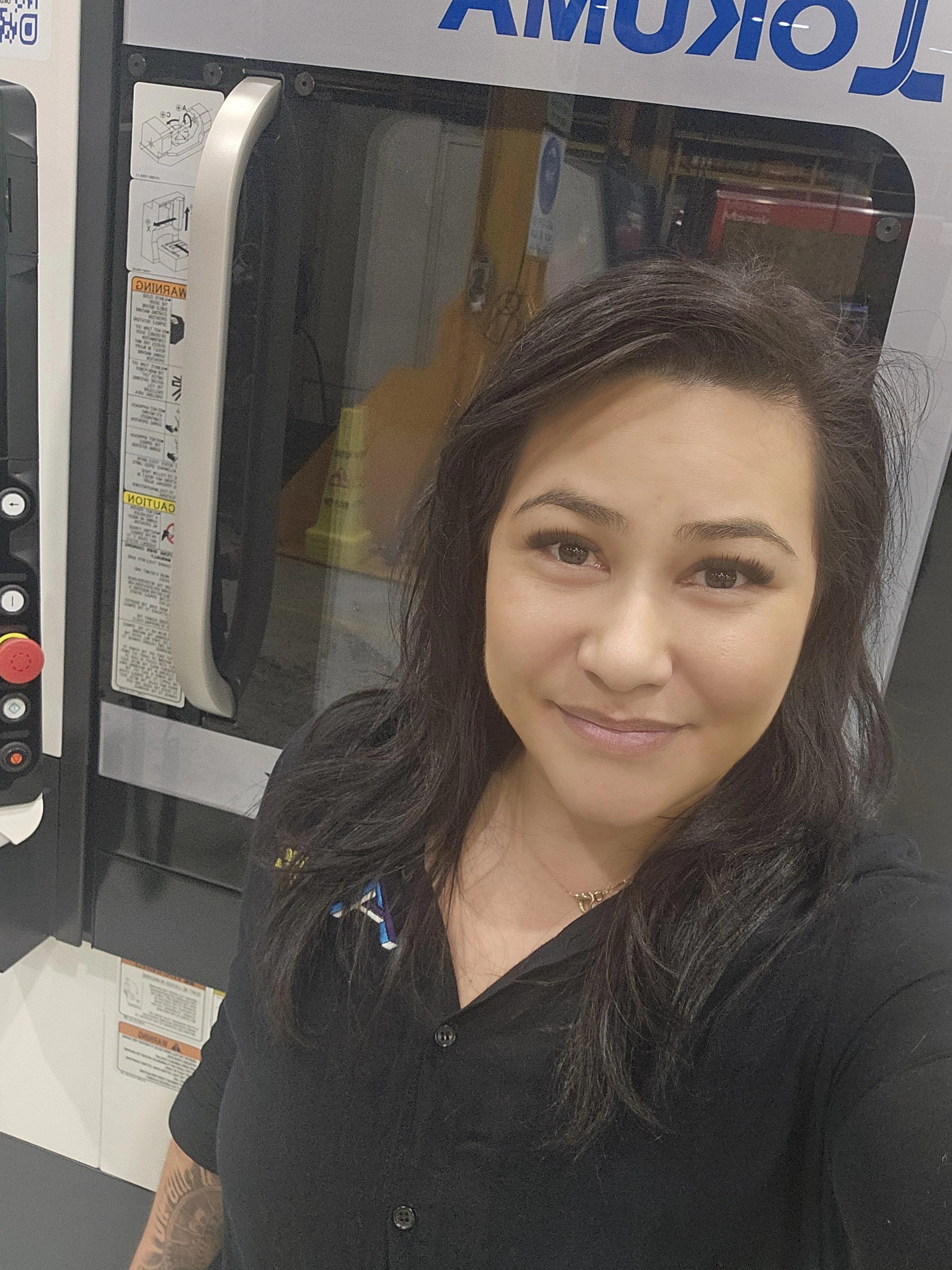 Dee Bourchier – Amiga Engineering – RFP Program Manager, Media and Marketing, grew up around her father’s manufacturing business and as a childwas fascinated with machines how things worked and how they were made. Creativity and building were always part of her world long before she realised that manufacturing would become her world.
After initially studying fashion design, followed by roles in hospitality and the fire suppression industry, Dee joined Amiga Engineering in technical sales for industrial transmission products. This became the pathway into manufacturing and a career built on learning, problem solving and real-world impact across critical industries.
Dee’s role model has always been her father Michael Bourchier, owner and founder of Amiga Engineering, whose passion and determination to bring advanced manufacturing capabilities to Australia continues to inspire.
Whilst the workforce within Amiga is traditionally male dominated, the company has employed women in a number of key roles including finance, administration, technical sales, apprenticeships, welding, advanced additive manufacturing, quality control and strategic leadership, all with great success.
Dee commented “There is still a perception in some quarters that manufacturing is ‘too hard’, ‘too dirty’ and ‘too male dominated’ but manufacturing today is cleaner, technically advanced, creative and highly rewarding for both male and female employees. There is also a strong culture of support and respect amongst work colleagues so there are no barriers to advancement where skill, resilience and a willingness to get the hands dirty are in evidence,” she said.
From Dee’s experience women are bringing significant strengths to manufacturing in areas such as attention to detail, strong communication and organisational skills. Women also bring structure to fast-paced environments, patience, creativity, analytical thinking, system analysis and development, occupational health and safety and environmental skills to create a clean and inviting workplace.
After twelve years in the industry Dee is deeply involved in strategic leadership capability development, national-level industry development and in positioning Amiga Engineering within sovereign capabilities, aerospace, space and high precision manufacturing sectors and in the promotion of some of the world’s most advanced technologies and manufacturing techniques.
Dee actively collaborates with Universities and Original Equipment Manufacturers where the voice of women in industry is heard and respected.
In summary, it is clear that the contribution of women within the manufacturing industry in Australia and New Zealand is extremely significant and beneficial in so many areas of manufacturing. As skills and technology continue to advance, the role of women and their understanding of business and technology will continue to benefit both countries.
By continuing to embrace inclusion, Australia and New Zealand industry can ensure its metalworking workshops and factories stand to endure symbols of resilience, creativity and national pride for generations to come.
Okuma Australia and New Zealand proudly acknowledge and thank all the women in the manufacturing industry – those who have paved the way with dedication and resilience and those emerging as the next generation of leaders.